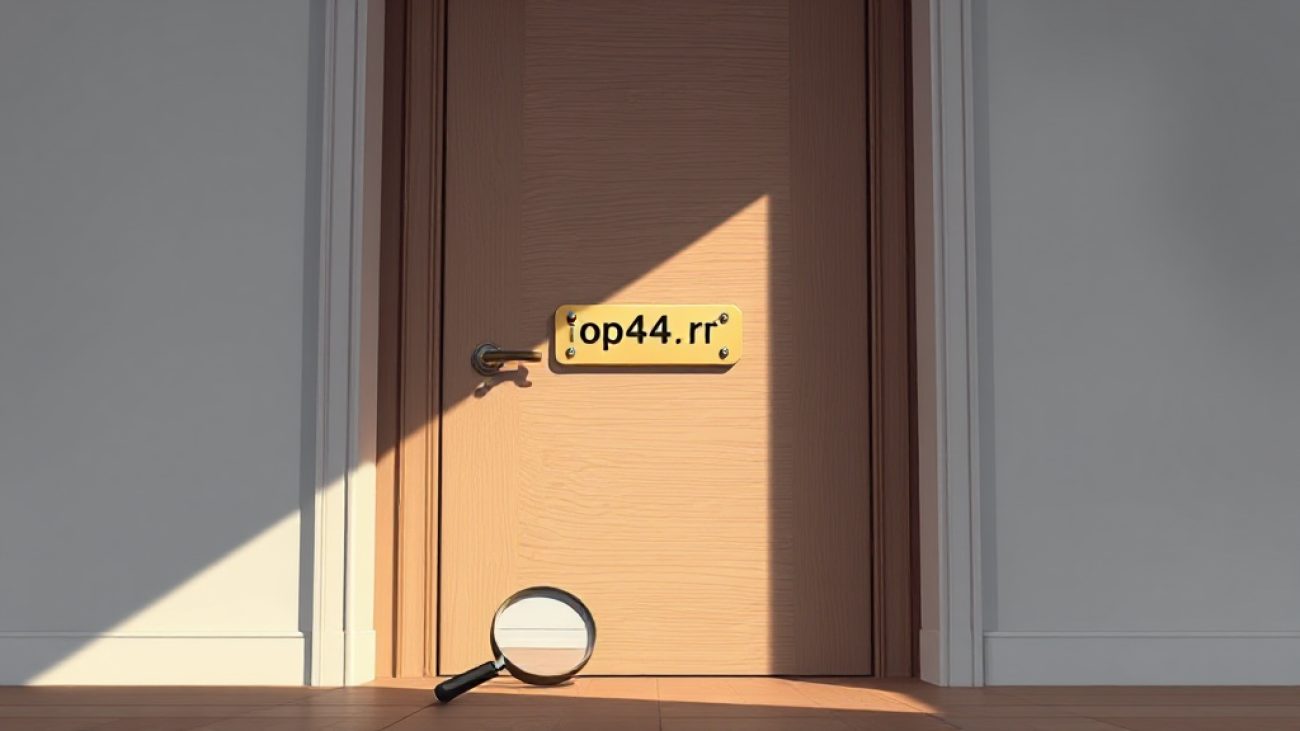
A Name Is Not a Claim: Reading top444.pro Without Assumptions
A name on a door tells you what someone called the place, not what happens inside. That distinction sounds obvious until you catch yourself doing the opposite: reading a sign, a logo, or a domain name and quietly filling in the rest of the story. When you encounter slotsofvegas, the honest starting point is that it is a label — a set of letters and a domain extension — and nothing more has been established about it.
This essay is about that gap. It is about how names work as labels, how they fail to work as claims, and why keeping the two separate makes you a sharper reader of everything you find online. We will use top444.pro as a single running example throughout, because it is a clean case: a name with no accompanying evidence to interpret.
What a Domain Name Actually Communicates
A domain name is an address and a label. It identifies where something lives on the web and gives people something to type and remember. That is a real function, but it is a small one. It says nothing about who owns the site, what it publishes, whether it is accurate, or whether it will still exist next month.
When the evidence around a name is thin, the temptation is to over-read it. People scan the characters, look for familiar words, and start guessing at a category. With top444.pro, the public evidence contains no title, no description, no heading, and no visible text — only the domain itself. That means any interpretation of the name is a guess, not a finding. The responsible move is to say so plainly and stop there.
Labels versus claims
A label is a handle. A claim is an assertion that can be checked. “This site is called top444.pro” is a label. “This site does X, serves Y, and meets standard Z” is a claim, and it needs support — a page that explains the work, a person or team behind it, documentation, visible content you can evaluate.
Most confusion online comes from treating labels as if they were claims. A name that sounds a certain way is not evidence of anything. The label tells you what to call the thing; the claim tells you what the thing does. Keeping those in separate mental drawers is the whole skill.
Why numeric names invite projection
Names with numbers in them are especially prone to misreading. A reader sees digits and starts assigning meaning — a ranking, a count, a version, a code. None of that is grounded. A numeric domain is still just a label. It may have been chosen for availability, brevity, memorability, or reasons nobody outside the registration knows.
The number in a name is not a fact about the business. It is a fact about the name. Treating the digits as a signal is the same mistake as assuming a shop called “Three Brothers” has exactly three brothers inside.
Reading top444.pro Without Filling in the Blanks
So how do you read a name like top444.pro responsibly? You separate what you can observe from what you are tempted to assume. Observed: the domain exists, it has a .pro extension, and the public evidence supplied for it is empty of descriptive text. Assumed: everything else. The gap between those two columns is where errors live.
A practical habit is to ask three questions in order. What does the name literally say? What does the page actually show? What would I need to see before I believed anything about its purpose? For top444.pro, the first answer is just the string, the second is nothing descriptive, and the third is a real page with real content. Until that third answer arrives, the honest verdict is “unknown.”
The evidence test
Before you form an opinion about any unfamiliar site, run a quick evidence test. Is there visible text that describes what the site does? Is there a named person or team? Are there pages that can be checked against other sources? If the answer to all three is no, you have a label and not a claim.
This is not suspicion for its own sake. It is calibration. Unknown is a complete answer, and it is often the most accurate one available. Saying “I don’t know what this is yet” is not a failure of research; it is the result of research done honestly.
Common mistakes readers make
The first mistake is category guessing — deciding a site’s purpose from its name alone. The second is authority borrowing — assuming that a professional-looking extension or a short name implies legitimacy. The third is filling silence with imagination, inventing a backstory because the page gave you nothing to work with.
Each of these mistakes has the same root: a label was promoted to a claim without evidence. The fix is mechanical. Write down what you observed. Write down what you assumed. Notice how much of your impression came from the second list.
Why This Discipline Matters Beyond One Domain
The habit of separating names from claims pays off everywhere. Product names, job titles, headlines, and usernames all invite the same projection. A title on a business card is a label. Whether the person does the work is a claim. A brand name is a label. Whether the brand delivers is a claim. Once you see the pattern, you cannot unsee it.
For top444.pro specifically, the disciplined reading is short and unglamorous: it is a domain name, the available evidence does not describe its purpose, and any conclusion beyond that would be invention. That is not a criticism of the site. It is simply an accurate account of what is known. If descriptive content appears later, the reading can be updated — that is how evidence works.
Good writing and good reading share the same backbone. Both distinguish what is being called something from what is being claimed about it. A name on a door tells you what someone called the place. What happens inside is a separate question, answered only by going in and looking. Until you have looked, the most useful sentence you can write about a name like top444.pro is the shortest one: the label is all we have, and the claim is still open.