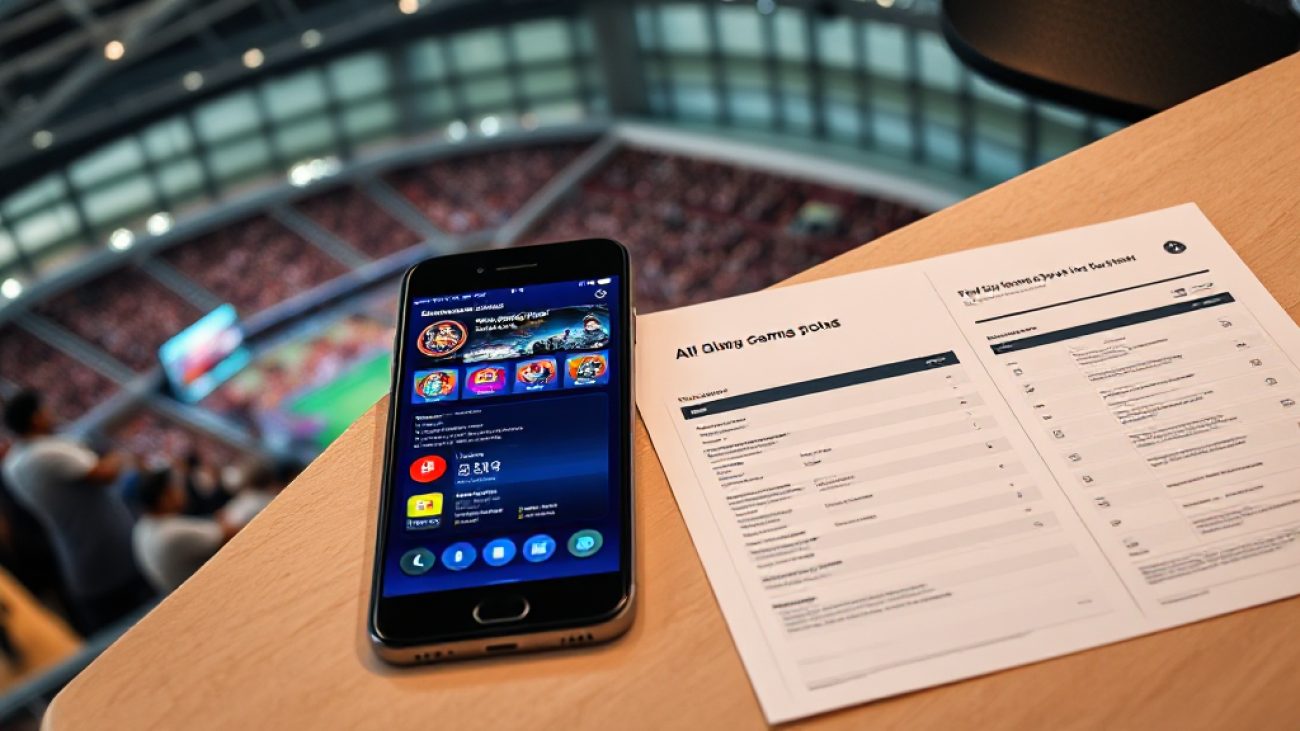
Read a Yono APK Listing Like an Engineer Reads a Datasheet
A listing page for a Yono APK is essentially a component datasheet: a compact set of declared specifications you must interpret before you commit. The search intent behind “Yono Rummy Bonus” is to find and evaluate a bonus offer, so the practical answer is to treat every line on the listing as a spec with a meaning, a tolerance and a failure mode. This reading teaches you to do exactly that.
The reference listing at Yono Rummy Bonus is a useful specimen because it presents bonus details, download instructions and app information in the same compact format. Commit to the analogy: each section below takes one spec line and shows what an engineer would extract from it.
Spec line 1: The declared bonus value
The first line most readers see is the headline number. An engineer reads it as a nominal value with conditions attached, not as a guaranteed output. The number tells you the maximum, while the fine print tells you the operating envelope.
Ask three questions of any declared bonus figure. What is the unit (cash, credit, voucher)? What triggers it (first install, first deposit, referral)? What is the expiry window? A value without those three parameters is an incomplete specification.
- Unit — cash balance, game credit or a reward voucher behave differently at withdrawal.
- Trigger — the exact action that converts the offer from advertised to active.
- Expiry — the time limit after which the spec line is void.
The takeaway is that the headline number is the least informative part of the line. The conditions around it carry the real engineering content.
Spec line 2: Eligibility and account requirements
Eligibility is the input constraint of the datasheet. It states who the offer is designed for and what the system will accept as a valid input. A new-user bonus and a returning-user bonus are different components even when they share a name.
Read for age verification, one-account-per-device rules and region restrictions. These are hard constraints, not suggestions. If your account state does not match the input specification, the offer will not activate regardless of how carefully you follow the download steps.
What to verify before installing
Confirm that your device meets the stated operating system version, that you have storage headroom beyond the installer size, and that you are using a single account identity. An engineer would call these pre-installation checks; skipping them is the most common source of “the bonus did not appear” reports.
Common eligibility misreads
The two recurring mistakes are assuming a bonus applies to every account on a device, and assuming an old account qualifies for a new-user reward. Both are input mismatches. The listing states the constraint; the reader supplies the wrong input.
Spec line 3: Download and installation parameters
The download section is the assembly procedure. It should tell you the file type, the approximate size, the source and the installation sequence. An engineer treats each of these as a parameter to be checked, not a paragraph to be skimmed.
Prefer the official source named in the listing over mirror sites. Verify the file type matches what the instructions describe, and allow the installation to complete before opening the app. Interrupting the sequence is equivalent to a partial assembly.
- File type — confirm the installer format the listing specifies.
- Size — check free storage against the declared size plus working space.
- Source — use the named official source, not an unlisted mirror.
- Sequence — install, then open, then register or log in, in that order.
Each of these parameters is boring individually. Together they determine whether the bonus activation step later in the process can succeed.
Spec line 4: Bonus mechanics and usage conditions
Usage conditions describe how the credited value behaves inside the app. This is where most readers stop reading and where most misunderstandings begin. The mechanics line defines play-through or turnover requirements, eligible game categories and withdrawal thresholds.
Read the mechanics as a state machine. The bonus enters an active state, moves to a completed state when conditions are met, and either becomes withdrawable or expires. Each transition has a rule attached, and the listing should state those rules explicitly.
Turnover and category restrictions
Turnover requirements specify how many times the credited amount must be used before withdrawal. Category restrictions specify which game modes count toward that turnover. A bonus that applies to rummy tables but not to other modes is a scoped component, not a universal one.
Withdrawal thresholds and expiry
The withdrawal threshold is the minimum completed balance required to request a payout. The expiry is the deadline for reaching it. An engineer would log both as hard limits and plan usage against them rather than discovering them at the end.
The practical reading is simple: the mechanics section determines whether the bonus is usable, not just visible. A large headline value with restrictive mechanics can be worth less than a smaller value with clean conditions.
Spec line 5: Support, updates and a worked reading
The final spec line covers support channels and update behaviour. A listing should name a support route for activation problems and indicate how app updates are delivered. An engineer treats missing support information as a gap in the datasheet, not as a minor omission.
Check whether the listing explains how to report a missing bonus, and whether updates arrive through the app or require a fresh download. Both affect long-term reliability of the offer you are evaluating.
Worked reading of a typical entry
Take a listing that advertises a first-install bonus, requires a single new account, specifies an installer size and file type, states a turnover requirement scoped to rummy modes, sets a withdrawal threshold and names a support route. Read in order, the entry tells you: the value is a first-install reward, the input must be a fresh account, the installation has a defined procedure, the credit is scoped and conditional, and there is a channel for exceptions.
Now compare that with an entry that lists only a headline number and a download button. The second entry is an incomplete datasheet. It is not necessarily wrong, but it gives you no way to verify the operating envelope, so treat it with corresponding caution.
The habit worth keeping is sequential reading: value, eligibility, installation, mechanics, support. Each line constrains the next, and the bonus only behaves as advertised when all five lines are read together. That is the difference between skimming a listing and specifying it.